Posted on 2/24/2026
If you’ve ever seen steam rising from under a vehicle’s hood on the side of the road, there’s a good chance the radiator was involved. Your radiator is one of the most important components in your vehicle’s cooling system. Its job is simple but critical: it keeps your engine from overheating. At Harlan Automotive, we often explain the radiator as the part that protects your engine from damaging itself due to excessive heat. Your engine creates an incredible amount of heat every time you drive. Controlled explosions are happening thousands of times per minute, and without a way to regulate that heat, internal components would quickly fail. The radiator works by circulating coolant, also known as antifreeze, through the engine. As the coolant moves through, it absorbs excess heat and carries it away from critical components. That heated coolant then travels to the radiator, where it passes through thin metal tubes and cooling fins. As air flows across those fins ... read more
Posted on 2/20/2026
.png)
If you’ve ever had your car suddenly struggle to start, your lights dim while driving, or a battery warning light pop up on your dashboard, there’s a good chance your alternator was involved. At Harlan Automotive, we talk with drivers in Western Kentucky, Southern Illinois, and Northeast Tennessee all the time who ask, “What does my alternator actually do?” Simply put, your alternator is what keeps your vehicle powered while it’s running. It works hand-in-hand with your battery, but they do very different jobs. Your Alternator: The Power Plant While You Drive Your car battery’s main job is to start the engine. Once the engine is running, your alternator takes over. The alternator: Charges your battery while you drive Powers your headlights, radio, power windows, and dashboard Supplies electricity to engine computers and fuel systems Keeps your vehicle running consistently Think of it like this: Your battery is ... read more
Posted on 2/17/2026
.png)
Why Is My Car Overheating? 3 Common Causes Drivers Should Know When your temperature gauge starts climbing or you see steam from under the hood, it’s not something to ignore. Engine overheating can quickly turn into expensive repairs if left unchecked. At Harlan Automotive, these are common reasons we see vehicles overheating. 1. Low Coolant or a Coolant Leak Your cooling system depends on antifreeze (coolant) to regulate engine temperature. If coolant is low due to a leaking hose, radiator, water pump, or reservoir, your engine won't be able to properly remove the heat. Warning signs: Sweet smell under the hood Colored fluid under your vehicle Temperature gauge running high Catching a coolant leak early can prevent major engine damage. 2. Faulty Thermostat The thermostat controls coolant flow through your engine. I ... read more
Posted on 2/3/2026
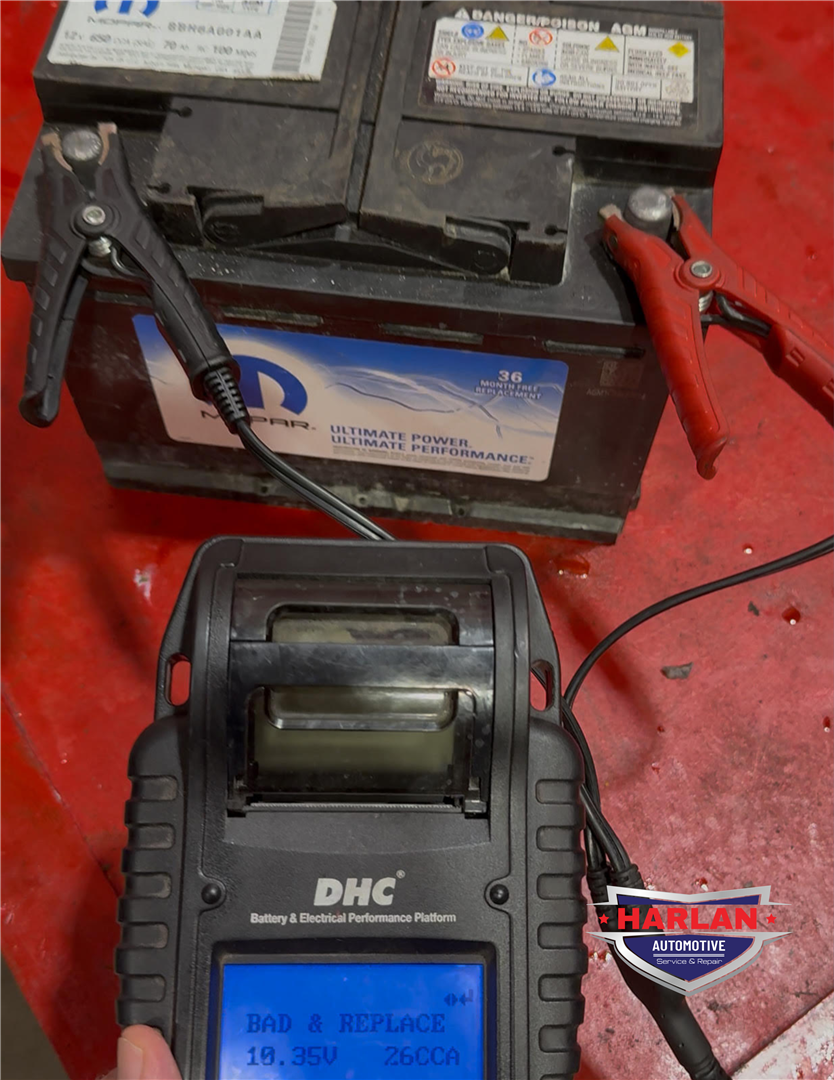
Most car batteries are designed to last between 3 and 5 years, but real-world conditions often determine where your battery falls in that range. Factors such as extreme heat, short driving trips, and today’s power-hungry electronics all take a toll. Extreme heat is especially tough on batteries, causing internal damage over time, while frequent short trips don’t usually give the alternator enough time to fully recharge the battery. Even when your car is parked, systems like alarms and computers continue drawing power. As a battery begins to weaken, there are usually warning signs. Slow engine cranking, dim headlights, dashboard warning lights, corrosion on the terminals, or the need for a jump start are all indicators that your battery might be nearing the end of its life. Many batteries don’t fail gradually—they work fine until one day they don’t. That’s why it’s smart to start testing your ... read more